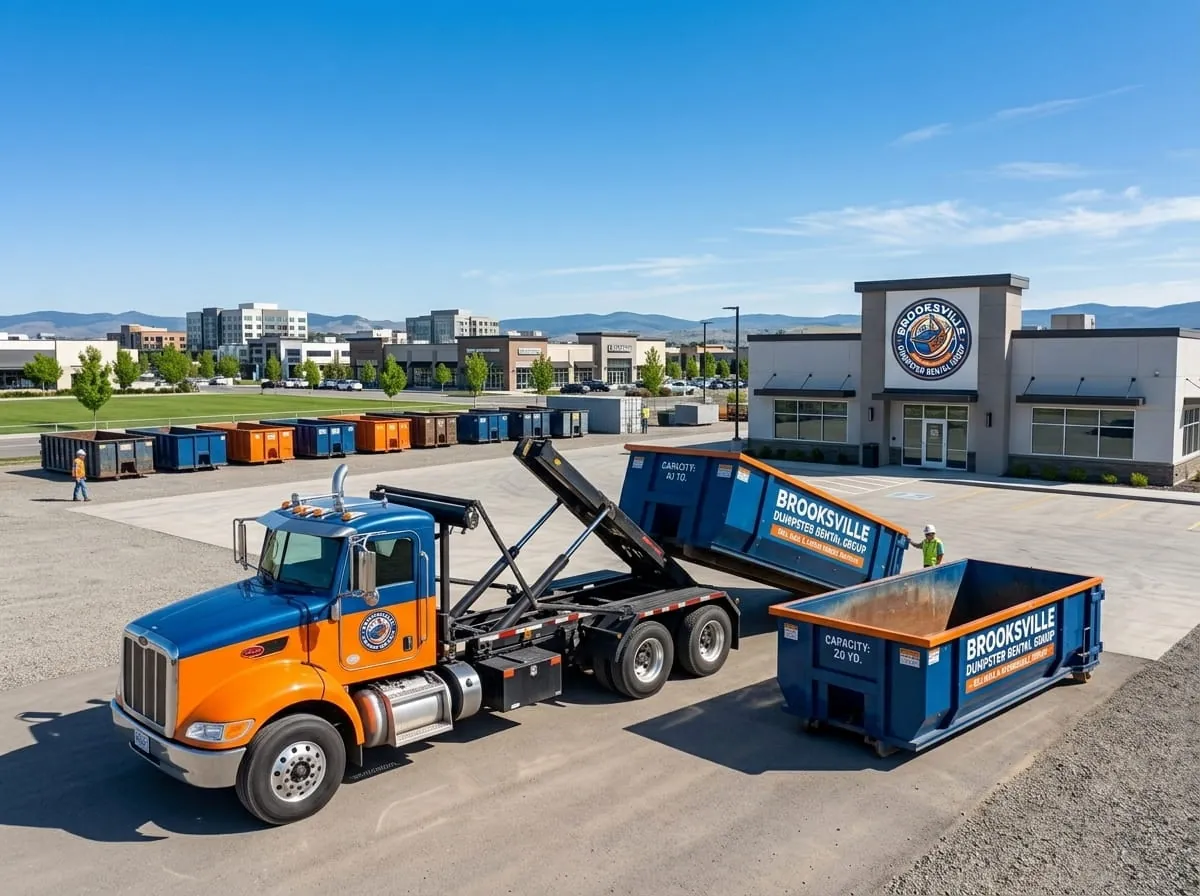
One of the most common questions we hear at Brooksville Dumpster Rental Group is deceptively simple: what can you actually throw in a roll-off dumpster? The short answer is that a dumpster handles the vast majority of everyday junk, renovation waste, and storm cleanup you'll generate around a Hernando County home or job site. The longer answer is that a handful of materials are prohibited by law, banned by local landfills, or simply too heavy for a standard container. A little planning goes a long way here, because the wrong item in the wrong bin can turn a routine cleanup into a costly headache. Knowing the difference before your bin arrives saves you money, keeps your rental on schedule, and helps you avoid overage fees or a refused load at the transfer station.
This guide walks through exactly what belongs in your dumpster and what needs a different disposal path. Because we serve Brooksville and all of Hernando County, we've also folded in the Florida-specific rules that trip up out-of-state newcomers and seasonal residents every year.
What You Can Throw in a Roll-Off Dumpster
The good news is that most of what you want to get rid of is perfectly acceptable. A roll-off dumpster is built to swallow bulky, awkward, and mixed loads that your weekly curbside pickup will never touch. If it's non-hazardous and it fits, it very likely goes in the bin.
Everyday Household Junk and Furniture
Clearing out a garage, downsizing, or emptying an estate? Nearly all of it is fair game. Typical accepted household items include:
- Furniture — couches, mattresses, dressers, tables, chairs, and bed frames
- Boxes, packing material, clothing, toys, and general clutter
- Carpet, rugs, and padding pulled up during a remodel
- Non-electronic housewares, cookware, and decor
- Bagged trash and everyday non-recyclable waste
If you're purging an entire home and the volume feels overwhelming, our junk removal service can handle the heavy lifting for you rather than leaving the whole job to a single bin.
Renovation and Construction Debris
Remodeling projects produce a lot of waste fast, and most of it is dumpster-friendly. Standard construction and demolition (C&D) debris that we accept includes:
- Lumber and wood — framing, trim, plywood, and pallets
- Drywall, plaster, and sheetrock
- Roofing shingles (let us know, as weight adds up quickly)
- Flooring, tile, cabinetry, and countertops
- Siding, fencing, doors, and windows
Yard Waste and Storm Debris
In Central Florida, vegetative debris is a category all its own. Between fast-growing subtropical landscaping and hurricane season, Hernando County homeowners generate an enormous amount of green waste. Dumpsters readily accept branches, limbs, palm fronds, brush, leaves, shrubs, and small stumps. After a storm, a roll-off is often the fastest way to clear a yard full of downed vegetation before it starts to rot in the humidity and attract pests.
One important Florida reality: wet yard debris is deceptively heavy. Rain-soaked palm fronds, waterlogged branches, and green vegetation hold a tremendous amount of moisture, and weight is what drives disposal cost at the landfill. A bin that looks half-full of leaves can still hit its weight limit. If you're cleaning up after a summer downpour or a tropical system, let us help you size the container correctly so you don't get surprised.
What You Cannot Put in a Dumpster
Some materials are strictly off-limits. These aren't arbitrary rules. Florida landfills and transfer stations enforce state and federal regulations, and a load contaminated with a prohibited item can be rejected outright or hit with steep surcharges. When in doubt, ask us first.
Hazardous and Regulated Materials
Anything toxic, flammable, corrosive, or reactive is banned from roll-off dumpsters. Keep these out of the bin:
- Wet paint, stains, solvents, and lacquers — dried-out latex paint cans are sometimes acceptable, but liquid paint never is
- Motor oil, gasoline, antifreeze, and other automotive fluids
- Pesticides, herbicides, and pool chemicals
- Asbestos and any material suspected of containing it
- Medical waste, chemicals, and industrial byproducts
Appliances, Electronics, and Pressurized Items
Several everyday items are prohibited because of how they're built rather than what they're used for. Florida takes several of these seriously under its recycling and hazardous-waste rules:
- Appliances with Freon — refrigerators, freezers, air conditioners, and dehumidifiers. Under federal law, the refrigerant must be professionally recovered before disposal. In Florida, this Freon-removal step is mandatory and must be documented.
- Electronics (e-waste) — TVs, computer monitors, and CRTs are banned from Florida landfills and must be recycled separately.
- Tires — Florida law prohibits whole tires in landfills; they require a dedicated recycler.
- Batteries — car batteries, lithium-ion packs, and rechargeables can leak or ignite.
- Propane tanks and pressurized cylinders — even "empty" tanks can explode when compacted.
Not sure where an appliance or electronics pile should go? Call us and we'll point you to the right local drop-off, or arrange a separate haul so nothing contaminates your main load.
Heavy Materials That Need a Dedicated Bin
Some materials are perfectly legal to dispose of but far too dense for a standard mixed-waste dumpster. Concrete, brick, block, asphalt, stone, dirt, and roofing tile are the classic examples. A general container filled with concrete would blow past its weight limit long before it looked full, and an overloaded roll-off is unsafe to transport and illegal on the road.
For these projects we provide a separate, purpose-built container. If your job involves broken sidewalk, a demolished patio, or a truckload of masonry, our concrete and heavy debris service gives you the right bin at a flat rate, sized for weight rather than volume. Keeping heavy inert material in its own dedicated dumpster is almost always cheaper than paying overage fees on a mixed load. If you're mixing a small amount of masonry into a larger renovation project, tell us up front so we can recommend the smartest, most affordable approach for your particular debris.
Florida and Hernando County Disposal Rules to Know
Local regulations shape what your dumpster provider can and can't accept, and Florida has a few that matter more than most:
- Landfill bans — the state prohibits whole tires, lead-acid batteries, used oil, and certain electronics from disposal in municipal landfills.
- Freon documentation — cooling appliances must have refrigerant certified as removed before a landfill will take them.
- Storm and vegetative debris — after a declared hurricane event, Hernando County sometimes runs separate curbside vegetative-debris programs, but for private cleanup on your own timeline, a roll-off is the reliable option.
- Weight limits — because Florida yard waste and C&D debris are so heavy when wet, staying under your bin's tonnage cap is the single biggest factor in avoiding extra charges.
Because we're local, we handle these rules for you. When you book with us, we'll flag anything in your project that needs special routing before it becomes a problem at the scale house.
Still Not Sure? Ask Before You Toss
The safest rule of thumb is simple: if it isn't hazardous, pressurized, an appliance with Freon, an electronic, a tire, a battery, or extremely heavy inert material, it can almost certainly go in your dumpster. Everything from a sofa to a stack of drywall to a yard full of storm-blown palm fronds is exactly what these bins are for. When something falls into a gray area, one quick phone call clears it up and protects you from surprise fees.
We keep our pricing flat-rate and transparent, so you know your cost up front with no per-pound guessing games as long as you stay within the agreed limits. Have a question about a specific item, or ready to schedule a drop-off in Brooksville or anywhere in Hernando County? Reach out through our contact page or simply call.
Book Your Brooksville Dumpster Today
Skip the guesswork and get a clean, compliant cleanup from a local team that knows Florida's rules. Call Brooksville Dumpster Rental Group at (352) 397-2562 for fast, flat-rate roll-off dumpster rental across Brooksville and Hernando County.
Founder, Brooksville Dumpster Rental Group — sharing straight advice from more than 15 years of local hauling experience.