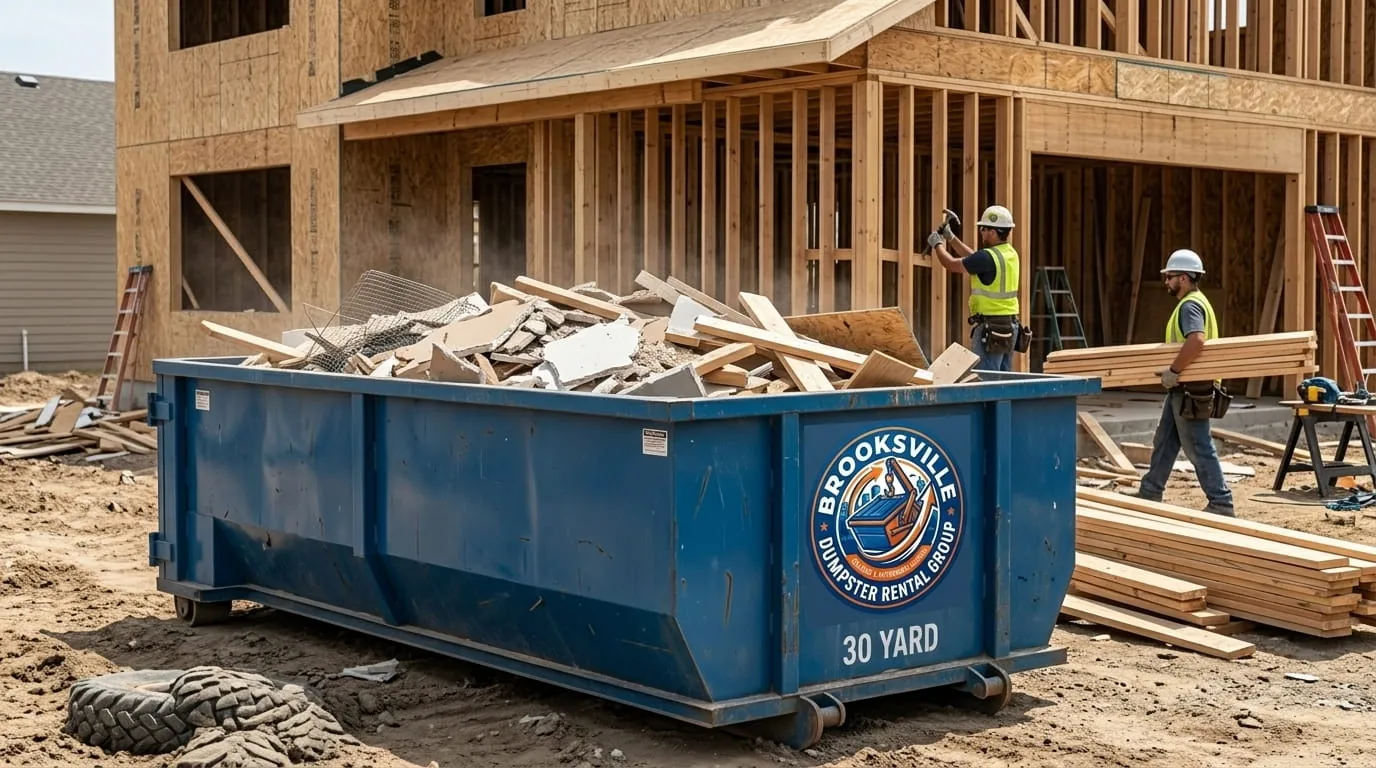
When a fully loaded roll-off dumpster rolls onto your property, it can carry several tons of steel and debris on a narrow set of wheels. That concentrated weight is exactly why homeowners across Brooksville and Hernando County ask us how to keep their driveway looking new. The good news: with the right preparation and a delivery crew that knows what it's doing, you can rent a dumpster and never see a crack, gouge, or oil stain. This guide walks through how driveway damage actually happens, why Central Florida's climate and driveway styles raise the stakes, and the simple, proven steps that prevent problems before the truck ever arrives.
Why Heavy Roll-Offs Can Damage Concrete and Asphalt
A roll-off dumpster is not a static object. It arrives on a truck, slides off the back on steel rollers, and rests on small wheels and a metal tongue. During that delivery and pickup, the entire load pivots on just a few contact points. Those points can exceed the surface's tolerance and leave lasting marks. A single empty container may weigh a couple thousand pounds on its own, and once you fill it with roofing shingles, concrete chunks, or wet yard debris, the total can climb well past that. The three most common forms of damage we see are:
- Cracking: Concentrated point loads press down harder than the slab or asphalt was designed to bear, especially over hairline weaknesses or hollow spots.
- Gouging and scraping: Steel wheels and the container's rear edge can dig in as the box is dragged into position or winched back onto the truck.
- Staining: Rust from the container, plus oil or debris runoff, can leave dark marks that soak into porous concrete or soft asphalt.
None of this is inevitable. It happens when a heavy container meets an unprotected surface. Put a barrier between the two, position the box thoughtfully, and the risk drops dramatically. The difference between a damaged driveway and a spotless one usually comes down to a few dollars of plywood and a crew that takes the extra two minutes to place it correctly.
Protective Barriers: Plywood and Boards Under the Wheels
The single most effective protection is a layer of plywood or heavy planks placed under the container's wheels and tongue. This is standard practice for any careful operator, and it costs almost nothing compared to a resurfacing job that can run into the thousands.
How Boards Spread the Load
A sheet of thick plywood works like a snowshoe. Instead of the weight pressing through four small wheels, the board spreads that force across a much larger footprint. The pounds-per-square-inch on your concrete or asphalt drop sharply, which is what keeps a slab from cracking and keeps wheels from denting the surface. It is a small piece of physics that saves a lot of money.
- Use 3/4-inch plywood or solid 2-by planks rated for the load.
- Place boards under both rear wheels and the front tongue — the tongue often bears surprising weight once the box is loaded.
- Make sure boards sit flat with full contact, not bridging a gap where they could snap.
- Keep spare boards handy if your driveway slopes, so the container stays level as it settles.
When you book with our residential dumpster rental team, we plan surface protection into the delivery rather than treating it as an afterthought. It is part of doing the job properly, not an add-on.
Florida Heat and the Asphalt Softening Problem
Brooksville summers are no joke. When afternoon temperatures climb and the sun bakes a dark driveway, asphalt softens and becomes far more prone to indentation. A container that would sit harmlessly on a cool morning can press permanent wheel divots into the same asphalt by mid-afternoon. Asphalt is essentially a flexible, petroleum-based surface, and heat makes it more pliable — great for shedding water, bad for bearing concentrated loads.
This is a distinctly Florida concern, and it changes how we approach delivery in Hernando County:
- Timing matters: Early-morning placement onto cooler asphalt reduces softening risk.
- Boards are non-negotiable: On asphalt, plywood under every contact point is essential during the hottest months.
- Duration awareness: A container sitting for two weeks through repeated heat cycles needs solid, wide support so it does not slowly sink.
- Shade and slope: A driveway that gets full afternoon sun deserves extra caution compared to one shaded by oaks.
Our local crews know the regional climate and factor the heat directly into how and when they set your container down.
Driveway vs. Street vs. Yard Placement
Where the dumpster sits is just as important as what sits under it. Each option has trade-offs, and the right choice depends on your property, your surface, and your municipality's rules.
Driveway Placement
The most common and convenient choice. It keeps debris off public right-of-way and close to your work. The catch is that many Brooksville homes have concrete-slab drives, paver driveways, or lanai-style surfaces that need real protection. Pavers can shift or crack under point loads, so boards and careful positioning are critical. Concrete slabs common in Florida hold up well, but joints and edges remain vulnerable.
Street Placement
Placing a container on the street spares your driveway entirely, but Hernando County and city rules often require a permit for right-of-way placement, along with reflective markings for safety. It is a solid option when your driveway is delicate, too short, or too steep to hold a loaded box safely.
Yard Placement
Central Florida's sandy, soft soil makes yards risky. A loaded box can sink into a lawn, rut the turf, and become difficult to retrieve after heavy summer rain. If a yard is the only option, a wide base of plywood or plank cribbing is a must to keep the container from settling into the ground, and we may recommend waiting for dry weather before delivery.
Avoiding Gouges During Load and Unload
Most driveway damage happens in the few minutes of delivery and pickup, not while the box simply sits. As the container slides off the truck bed and is winched back on, the rear edge and rollers move across your surface under tension. A skilled operator controls that motion; a careless one drags it. These simple precautions make the difference:
- Clear the path: Remove loose gravel, sand, or debris that could grind into the surface under the wheels.
- Slow, controlled placement: The truck's winch should ease the box down, not let it drop and skid.
- Straight approach angles: Sharp turns increase side-scraping on pavers and concrete edges.
- Right-sized container: An overloaded box strains everything. Choosing an appropriate size like our 20-yard dumpster keeps weight manageable for a typical home project.
- Distribute the load inside: Spreading debris evenly rather than piling it at one end keeps weight balanced during pickup.
How a Good Company Protects Your Surfaces
Ultimately, the biggest factor in whether your driveway survives is the company you hire. A careful, local operator builds protection into every job rather than hoping for the best. Here is what that looks like in practice:
- Boards on board: Crews arrive with plywood and place it under wheels and tongue as standard procedure.
- Local knowledge: They understand Brooksville heat, sandy lots, and common Florida driveway types like pavers and concrete slabs.
- Honest guidance: They will recommend street or alternative placement when a driveway is genuinely too fragile.
- Flat-rate clarity: No surprise fees for doing the job right, so protecting your property is never treated as an upsell.
At Brooksville Dumpster Rental Group, surface protection is simply part of a professional delivery. If you want a crew that treats your driveway with the same care you do, call us and we'll walk you through the safest placement for your home before we ever back the truck in.
Ready to book with confidence? Reach out through our contact page or call (352) 397-2562 for fast, flat-rate service across Brooksville and Hernando County.

Founder, Brooksville Dumpster Rental Group — sharing straight advice from more than 15 years of local hauling experience.